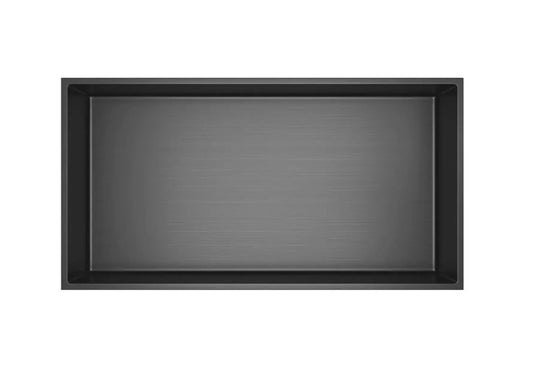
Install the recess yourself
Installing a bathroom niche yourself can be a great way to create extra storage space or give your bathroom a modern look. Installing a built-in niche yourself;
Here are the steps for installing a niche in your bathroom or toilet:

Supplies:
- Metal or wooden slats (for the frame construction)
- Tiles or other finishing materials for the niche
- Cement or tile adhesive
- Sealant or silicone sealant
- Saw or grinder (for cutting the materials to size)
- Spirit level and measuring tape
- Drill with suitable drill bits
- Fastening materials (screws, plugs)
- Grout and joint filler
Step-by-step plan:
1. Determine location
- Choose the right location for your alcove. Consider the bathroom's layout and the available space. A popular location is above the bathtub or in the shower, but you can also create a storage niche on the bathroom wall.
2. Determine dimensions
- Measure the size of the niche you want to create. Consider what you want to store in it (e.g., shower gel, shampoo, towels) and choose a suitable size. Make sure the niche isn't too big or too small for the space.
3. Prepare the wall
-
Depending on your wall type (tiles, drywall, concrete, etc.), make sure you prepare it properly. If you have a tiled wall, you can remove the tiles where you want the recess. If you have a drywall wall, you can cut open the wall at the desired location.
-
Note: If you are creating a niche in a brick or concrete wall, you may need to consult a structural engineer to ensure you do not damage any load-bearing walls.
4. Make a niche in the wall
- Saw or cut an opening in the wall based on the dimensions you have determined.
- If the niche is in a load-bearing wall, make sure you add the appropriate support and reinforcement to ensure the wall's stability.
5. Create frame
- Create a frame for the niche. This frame can be made from metal slats or wooden beams. Attach the frame securely to the wall so that the niche is well supported.
6. Plastering and tiling
- Once the frame is finished, you can tile the niche. This creates a neat finish and makes it easy to clean. Apply tile adhesive to the wall and the edge of the frame and carefully place the tiles.
- Make sure that the edges of the niche are finished properly so that no water can penetrate.
7. Finishing
- Use caulk or silicone to seal the edges of the niche, especially around the corners and the joint with the wall, to prevent water ingress. This prevents mold and water damage.
- Add tiles to the inside of the alcove. You can choose a different tile than the rest of the bathroom for a playful or striking look.
8. Joints and sealing
- Apply grout between the tiles. Be sure to press it firmly and wipe away any excess. Let the grout dry and finish the joints with a damp sponge.
- Finally, apply a waterproof silicone sealant around the edges of the niche, especially if it is placed in the shower or around the bath.
- Allow it to dry thoroughly and wait at least 12 hours before showering or using water, so that the sealant or grout has time to dry properly.

Tips:
- Waterproofing: Make sure the niche is properly sealed, especially if it's located in a shower. This prevents water damage.
- Niche Uses: You can use the niche to store bathroom accessories, such as shampoo bottles, shower gel, or decorations such as small plants or candles.
-
Lighting: Consider installing lighting in the alcove for added ambiance and functionality.
Determining the size of your bathroom or toilet alcove is an important step, as it affects not only its functionality but also the aesthetics of the space. The right dimensions ensure the alcove fits well within the space and can fulfill the desired storage or decorative function.
Here are some guidelines and considerations for determining the right size for your niche:

1. Functional use of the niche
Depending on the purpose of your niche, you'll want to tailor the dimensions to the items you want to store in it or the function the niche needs to fulfill:
-
For storage space :
- Shower or bath niche : If you're going to use the niche to store shower products like shampoo, soap, and shower gel, it should be deep enough to accommodate these bottles. The width can vary, but generally, a niche between 30 and 60 cm wide is sufficient to accommodate several bottles. The depth can be between 10 and 20 cm , depending on the size of the bottles you want to store.
- Toilet niche : If the niche is primarily intended for towels or toiletries, it should be large enough to accommodate them. A depth of 12-15 cm is often sufficient for storing towels or toilet paper.
-
Decorative niche :
- If the niche is more decorative, for example, for displaying plants, candles, or other decorative objects, you can work with a shallower depth. In that case, 10-15 cm is often sufficient.
- The height can vary depending on the space and the type of objects you want to place in it. For a plant, for example, a height of 30 to 50 cm is often perfect.
2. Available space
The space in your bathroom or toilet largely determines how large you can make the niche:
-
When installing a niche in the shower :
- When creating a shower alcove, it's important to consider the available wall space so the alcove doesn't obstruct your freedom of movement. Choose a location that won't obstruct the showerhead, shower wall, or door. A horizontal alcove (left to right) often works better in smaller spaces, while a vertical alcove (top to bottom) works well when there's less space up there.
-
When installing a niche in the toilet :
- In a small restroom, it may be necessary to keep the niche relatively small to save space. In this case, consider a niche 30-40 cm wide and 10-15 cm deep .
- Make sure the niche is in a place where you can easily access it without making the space too closed off.
-
For storage space :
3. Relation to space
-
With these steps, you can install a bathroom niche yourself. If you have specific questions about a particular step or about the materials you can use, feel free to contact the Sanisupreme team!
Make sure the alcove is well-proportioned to the rest of the room. If you're creating an alcove in a small bathroom or toilet, it's best to choose a more compact alcove to avoid making the space feel too crowded or claustrophobic. In a larger bathroom, you can certainly consider a larger alcove, but be careful not to detract too much from the rest of the interior.
5. Practical tips for determining the size
-
Alcove Height : If you're placing the alcove in a convenient location for storing items, consider how high you want it to be. Alcoves at shoulder height (approximately 120-150 cm from the floor) are usually best for easy access.
-
Light and visibility : If you place a niche at the edge of the room, ensure there is sufficient light so the niche's contents are clearly visible. If you're creating a niche in a dark corner, consider integrating lighting into the niche.
-
Recess depth : The depth of the recess depends on what you want to store in it. For products, choose a depth of 10-15 cm . For larger items like towels, you can go deeper, for example, 20 cm .
6. Flexibility in design
If you're unsure about the best size, you can work with a flexible design. For example, if you don't want to fill the niche immediately, you can make it slightly larger, allowing for easy adjustments later. This can be especially helpful if you redesign your bathroom in the future or want to give the niche a different function.
Conclusion:
The size of your niche depends largely on your needs and the available space. For functional niches in the shower or above the bath, it's important that the niche is deep enough to store bottles and other items, while a decorative niche can be somewhat smaller. When determining the dimensions, it's important to consider the space you have, what you want to store in it, and how the niche fits into the rest of your bathroom or toilet's design.
-